

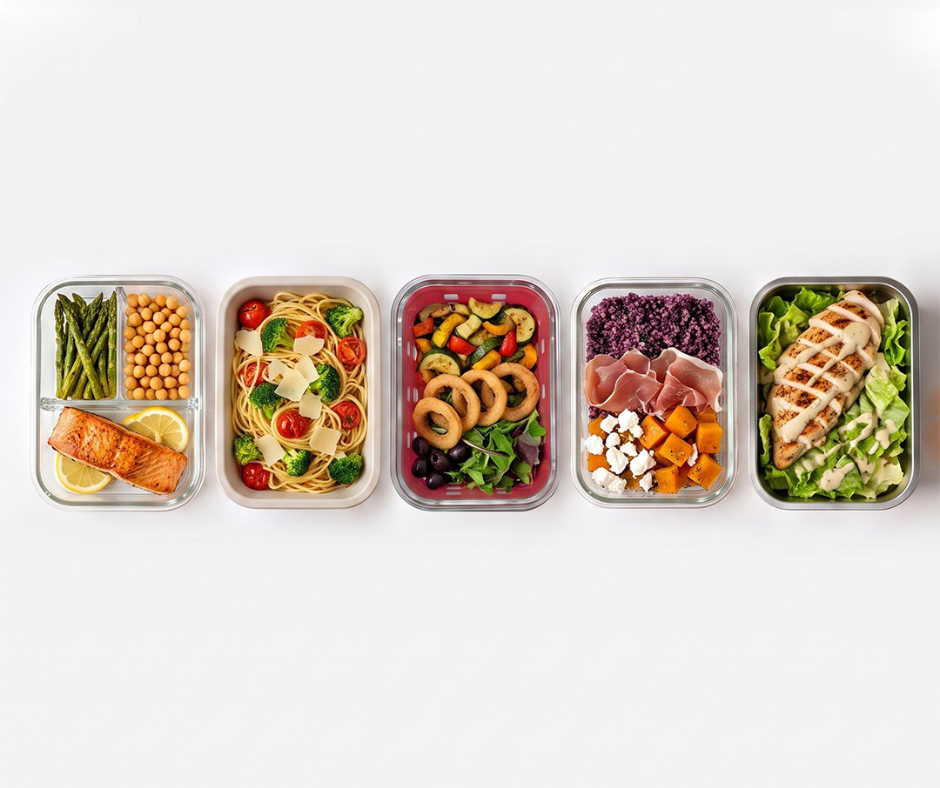
Meal prep containers tend to look pretty similar when they’re lined up in a cabinet. But once you start using them every day, the material makes a bigger difference than you might expect.
A container that works beautifully for leftovers at home may feel too heavy in a work bag. The lunch box you carry everywhere might not be the one you want for baking and serving. And if reheating is part of your daily routine, that changes the equation again.
That’s why there isn’t one “best” material for every kitchen.
Stainless steel, borosilicate glass, and stoneware each have their own strengths. The right choice comes down to how you cook, store, reheat, and carry your food.
Here’s how they compare.
The Quick Comparison
| Material | Best For | Weight | Reheating | Everyday Durability | See-Through |
|---|---|---|---|---|---|
| Stainless Steel | Packed lunches, meal prep, frequent use | Lighter | Oven & air fryer* | Excellent | No |
| Borosilicate Glass | Leftovers, meal prep, reheating | Medium–Heavy | Microwave & oven* | Very Good | Yes |
| Stoneware | Store-to-table meals, baking, serving | Heavy | Microwave & oven* | Very Good | No |
*Always follow the care instructions for the specific container and lid. Lids may need to be removed before heating.
Stainless Steel: Built for the Everyday Routine
There’s a reason stainless steel has been a kitchen staple for generations: it’s tough.
For anyone who regularly packs lunch for work, meal preps for the week, or simply doesn’t want to baby their food containers, stainless steel makes a lot of sense.
Unlike glass or stoneware, there’s no concern about the base shattering if it gets knocked around. It’s also relatively lightweight for its durability, which matters more than you might think when your lunch is sharing a tote with a laptop, water bottle, and everything else you carry through the day.
Genicook’s rectangular stainless steel containers use 316L stainless steel, a grade valued for its corrosion resistance and durability. The containers pair the steel base with a tempered glass lid and silicone gasket for an airtight, spill-resistant seal.
Another practical advantage: the steel base can go into the oven or air fryer, so yesterday’s roasted vegetables or baked pasta can be reheated without transferring everything into another dish.

What We Like About Stainless Steel
- Durable enough for frequent, everyday use
- Lighter to carry than comparable glass or stoneware containers
- Resistant to stains and lingering food odors
- Great for packed lunches and meal prep
- Steel base can be used in the oven and air fryer
- A strong choice if you’re trying to reduce plastic in your food-storage routine
What to Consider
The biggest tradeoff is visibility. You can’t look through a stainless steel base to see what’s inside.
And while stainless steel is excellent for several types of reheating, it isn’t the natural choice for a standard microwave. If microwave reheating is central to your routine, glass or stoneware may fit your kitchen better.
Best for: commuters, frequent meal preppers, packed lunches, and anyone prioritizing durability.
Try: Genicook Rectangular Stainless Steel Containers
Borosilicate Glass: The Most Versatile All-Rounder
If you want one material that can move easily between meal prep, refrigerator storage, reheating, and serving, borosilicate glass is hard to beat.
Its biggest everyday advantage is simple: you can see your food.
That sounds minor until you’ve opened three opaque containers looking for last night’s pasta. Clear glass makes it easier to keep track of leftovers, organize a crowded refrigerator, and spot what needs to be eaten first.
Borosilicate glass is also designed to handle temperature changes better than ordinary glass, which makes it especially useful for food storage and reheating. It doesn’t readily absorb food odors or stains, either, so tomato sauce on Monday doesn’t have to leave its mark on Friday’s lunch.
The tradeoff is weight. Glass is heavier than stainless steel, and while durable, it can still break if dropped.
But within the glass category, the container’s design can make just as much difference as the material itself.
For Keeping Foods Separate: Divided Glass Bento Boxes
Some lunches simply shouldn’t mingle.
A divided borosilicate glass bento box keeps different parts of a meal separated without requiring several individual containers. Think rice and curry, chicken and vegetables, or a main dish with two sides.
Genicook’s divided glass bento design combines built-in compartments with a sealed lid, making it especially useful for portioned meal prep and packed lunches.

Best for: meal prep, portioned lunches, kids’ or adults’ bento-style meals, and anyone who dislikes mixed textures.
For Reheating: Glass with a Silicone Sleeve
The annoying part about reheating food in glass usually happens after the microwave timer goes off: the container itself can be hot.
A removable silicone sleeve adds a more comfortable layer between your hands and heated glass. Genicook’s High Top Lid borosilicate containers offer an optional silicone sleeve for easier handling after heating.
The high-dome lid also adds extra vertical room, which comes in handy for foods you don’t want compressed—stacked sandwiches, baked goods, pasta, or taller leftovers.
Best for: people who reheat lunch frequently or regularly move hot glass containers from microwave to table.
For Longer Storage and Marinating: Vacuum-Compatible Glass
For certain ingredients, removing excess air from the container can be useful for storage or marinating.
A vacuum-compatible glass system gives you the familiar advantages of glass while adding another way to manage food prep and storage. It’s particularly useful for home cooks who batch-prep ingredients, marinate proteins, or want a more organized refrigerator system.
Best for: serious meal preppers, ingredient prep, marinating, and organized fridge storage.
For Everyday Leftovers: Classic Rectangular Glass
Sometimes the simplest option is still the one you reach for most.
A classic rectangular borosilicate glass container works for nearly everything: last night’s dinner, chopped fruit, a make-ahead lunch, baked dishes, or Sunday meal prep.
Genicook’s rectangular glass containers are designed to stack easily and move between refrigerator, freezer, microwave, oven, and dishwasher, with the lid removed where required.
If you’re building a food-storage collection from scratch, this is probably the most versatile place to start.
What We Like About Borosilicate Glass
- Clear, so leftovers are easy to identify
- Doesn’t readily hold onto stains or odors
- Excellent for microwave reheating
- Useful for fridge-to-table serving
- Available in specialized designs for divided meals, hot handling, and vacuum storage
- Easy to clean
What to Consider
Glass is heavier than stainless steel and still needs some care when being carried or stacked.
Best for: households that reheat frequently and want one container to handle most everyday storage jobs.
Stoneware: From Leftovers to the Dinner Table
Stoneware sits somewhere between food storage and serveware—and that’s exactly its appeal.
You can store baked pasta in the refrigerator, reheat it, and bring the same dish directly to the table without it looking like a meal-prep container.
That makes stoneware especially appealing for home-centered routines. It feels substantial, holds heat well, and has the kind of finished look that works just as naturally for serving as it does for storing leftovers.
Genicook’s stoneware containers pair a stoneware base with a tempered glass lid, so you still get visibility from above without losing the ceramic look. The base can withstand temperatures up to 450°F and can be used for reheating or baking after removing the lid.
It’s also naturally resistant to stains and odors—helpful for everything from baked tomato dishes to curries.

What We Like About Stoneware
- Attractive enough to go directly from kitchen to table
- Excellent heat retention
- Suitable for microwave and oven reheating
- Useful for both cooking and food storage
- Resistant to stains and odors
- Available in colors that feel more like serveware than storage
What to Consider
Stoneware is the heaviest option of the three.
It’s wonderful around the house, but probably not the container you’ll want to carry on a long commute every morning. Like glass, it also deserves more careful handling than stainless steel.
Best for: home storage, oven-to-table dishes, leftovers, entertaining, and anyone who cares about how food looks when it’s served.
Try: Genicook Stoneware Containers
So, Which Material Should You Choose?
Instead of asking which material is “best,” start with what happens to your food after you make it.

If your lunch travels every day:
Go with stainless steel. It’s durable, relatively lightweight, and well suited to the daily commute.
If you microwave leftovers constantly:
Choose borosilicate glass. It makes reheating simple, and you can see exactly what’s waiting in the fridge.
If you meal prep different foods in one container:
A divided glass bento box keeps sides and mains neatly separated.
If you frequently handle containers right after reheating:
Look for borosilicate glass with a silicone sleeve.
If you want to store, bake, reheat, and serve in the same dish:
Choose stoneware.
If you want a dependable all-purpose option:
Start with classic rectangular borosilicate glass.
You Don’t Have to Pick Just One
The most functional kitchens usually aren’t built around a single material.
You might keep stainless steel containers for weekday lunches, glass containers for Sunday meal prep, and stoneware for the dishes that move from refrigerator to oven to dinner table.
That mix isn’t redundant. It’s practical.
Food storage works best when the container fits the food—and the way you actually live.
So before buying another matching set just because it looks good stacked in a cabinet, think about your routine. Where will you use it? How will you reheat it? Will you carry it? Do you want to serve from it?
Answer those questions first, and choosing the right container gets much easier.


Leave a comment
All comments are moderated before being published.
This site is protected by hCaptcha and the hCaptcha Privacy Policy and Terms of Service apply.